Beyond Prompts: From Chat to AI Governance
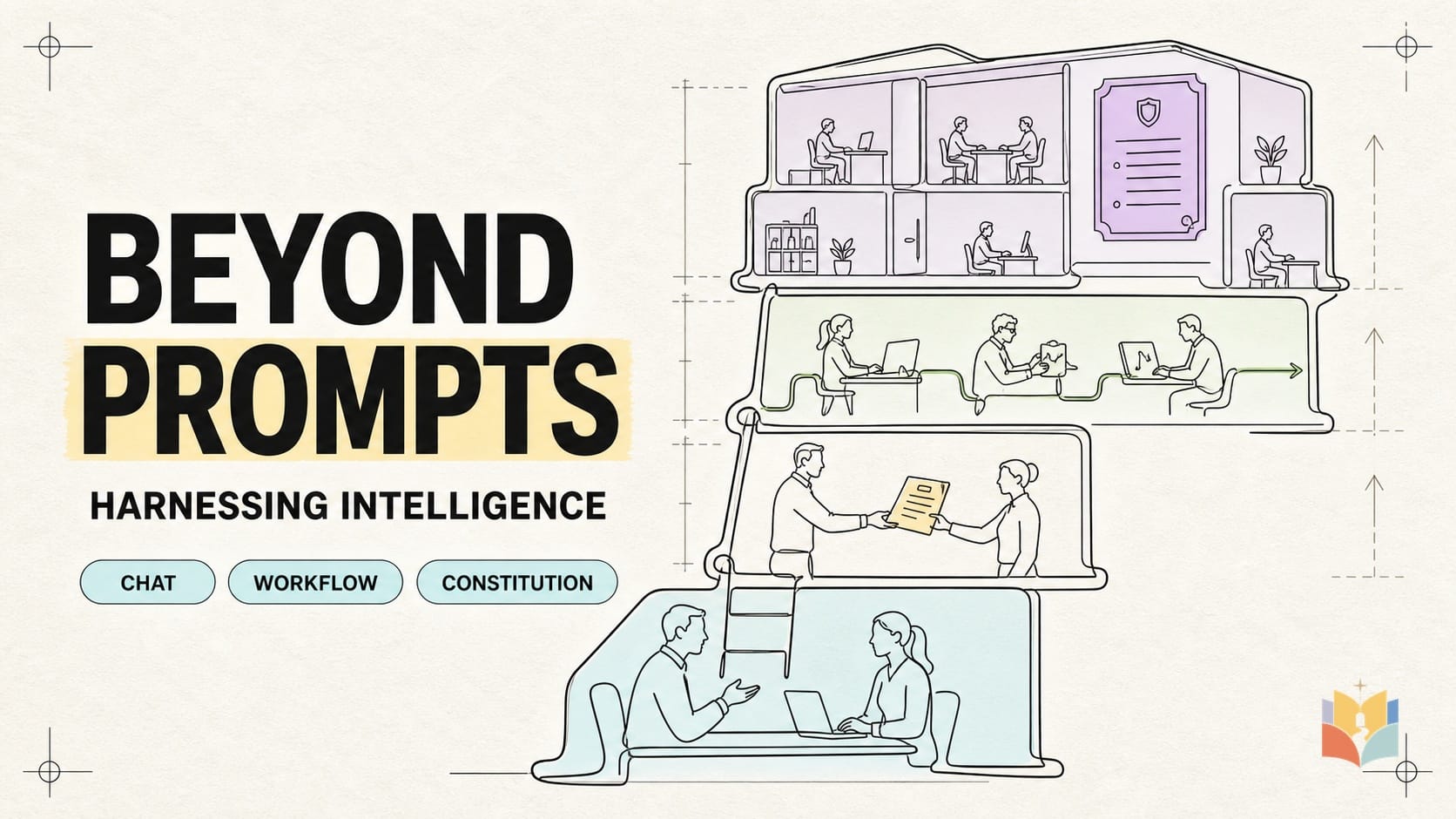
Reliable AI collaboration grows through four layers: Chat, Prompt, Workflow, and Constitution.

Chinese version: 中文版
A good prompt can improve one answer. It cannot, by itself, make a project remember yesterday, recover from failure, coordinate specialists, or get better next week. That is why the familiar picture of AI collaboration—a person searching for the perfect sentence—is too small.
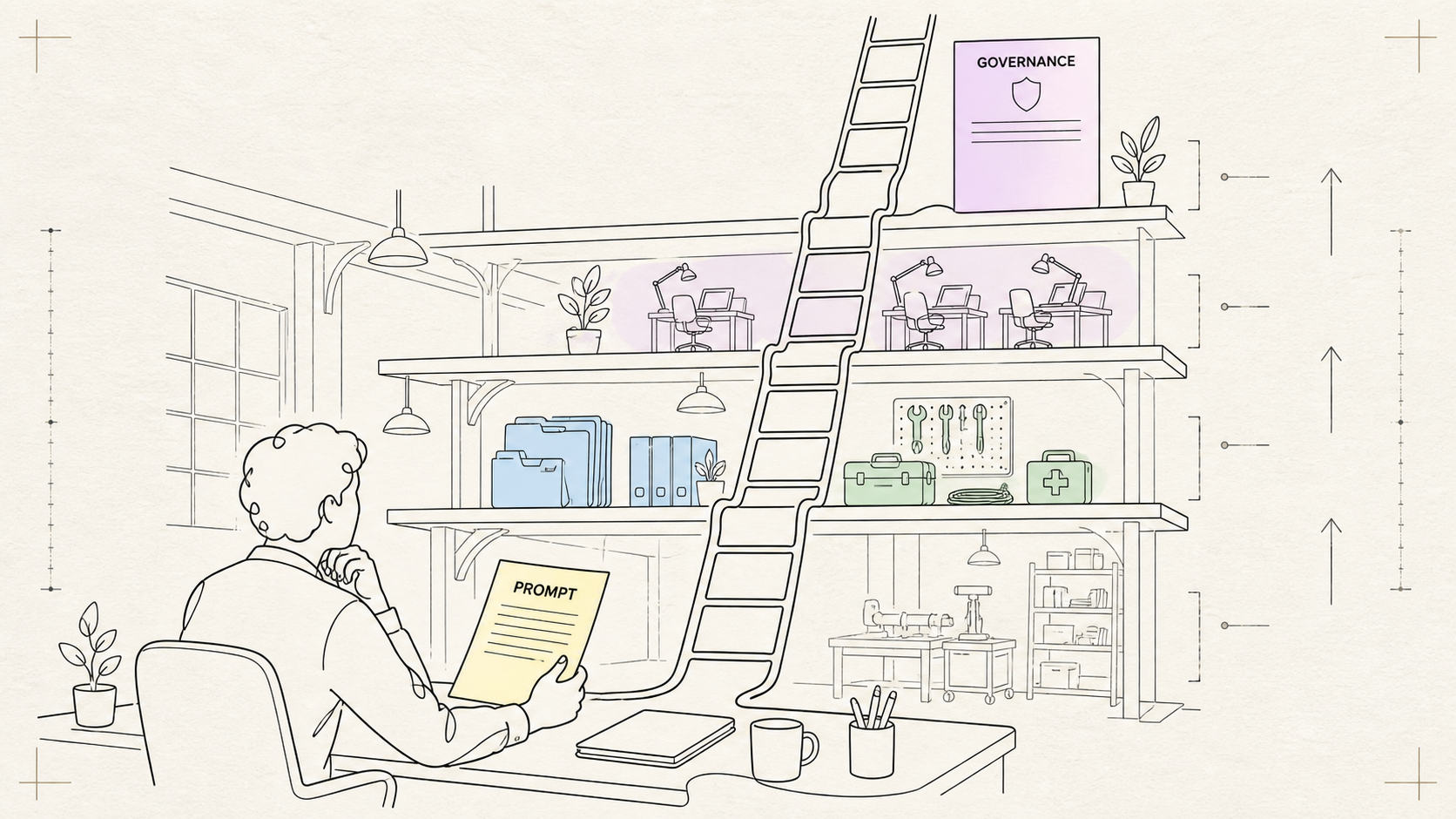
A more useful picture is a one-person workshop growing into a governed company. It begins with a conversation desk, adds written job briefs, develops an assembly line, and eventually needs a charter, defined roles, quality gates, and a shift log. That story carries the central framework of Leo Wang's book Harnessing Intelligence: Chat, Prompt, Workflow, and Constitution.
The history of AI collaboration is a history of rising abstraction.
The first rung: Chat
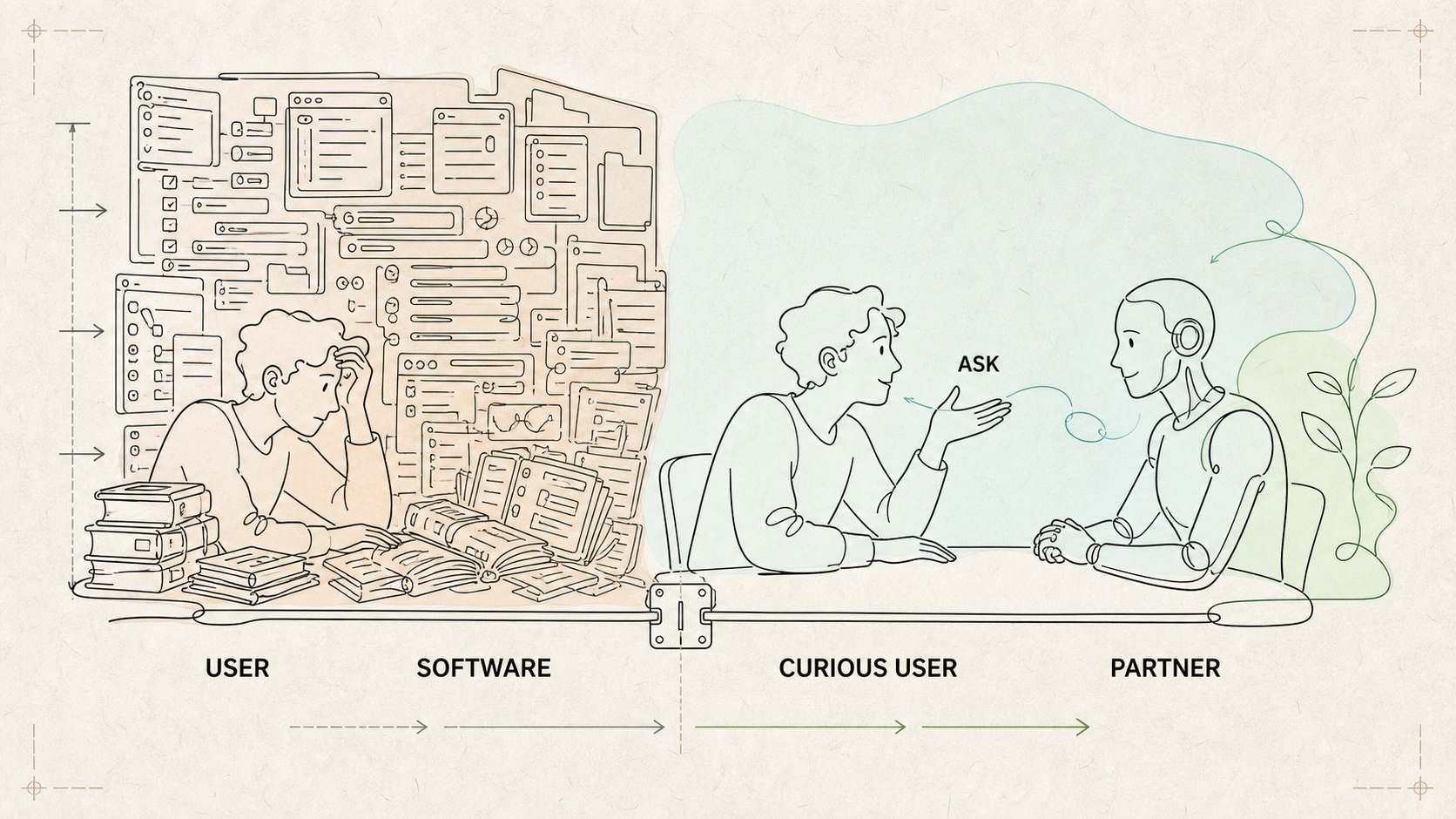
When ChatGPT opened to the public on November 30, 2022, its power arrived through an almost aggressively simple interface: a text box and a conversation. Instead of learning a specialized interface, menus, or command syntax first, people could begin in ordinary language. The human role was curious user. The AI role was conversational partner. The key action was asking.
Chat made intelligence accessible, but access was not control. The same broad request could produce a sharp answer today and a wandering one tomorrow. A conversation could unlock useful work without explaining how to repeat it reliably. The workshop had a remarkable worker at one desk, but no operating process.
The second rung: Prompt
The next move was to replace vague requests with better job briefs: a goal, an audience, a format, constraints, examples, and a definition of success. Prompt engineering captured a real discovery. How we frame a task changes the model's result, and structured instructions reduce how much the model must guess.
But a prompt is still a brief for one assignment. It does not preserve a project's history, decide how several specialists should cooperate, verify whether a file is valid, or recover a failed publication. Better wording can guide generation. It cannot guarantee truth, and it cannot run a company.
The third rung: Workflow
As the workshop becomes busy, work must be divided. Research happens before writing. Fact-checking challenges the draft. Images, narration, captions, metadata, and publishing have different requirements. Specialized agents handle judgment-heavy tasks; deterministic tools handle conversions, tests, uploads, and other steps where repeatability matters more than interpretation. Outputs move through gates, and independent work can run in parallel.
This is also where nearby terms become clearer. An agent is a model operating in a loop: inspect, choose an action, use a tool, observe the result, and continue. RAG can retrieve relevant documents into the current task. MCP provides a standard way for AI assistants to connect with tools and data sources. These pieces increase capability, but they do not automatically create coherent authority, memory, or quality policy.
Why context is not institutional memory
At the model-call level, a text-generation request is stateless unless the surrounding application persists and resupplies state. A larger context window gives the model more material during one shift, but it does not automatically preserve why the team rejected an idea last month or turn a recurring failure into a permanent safeguard.
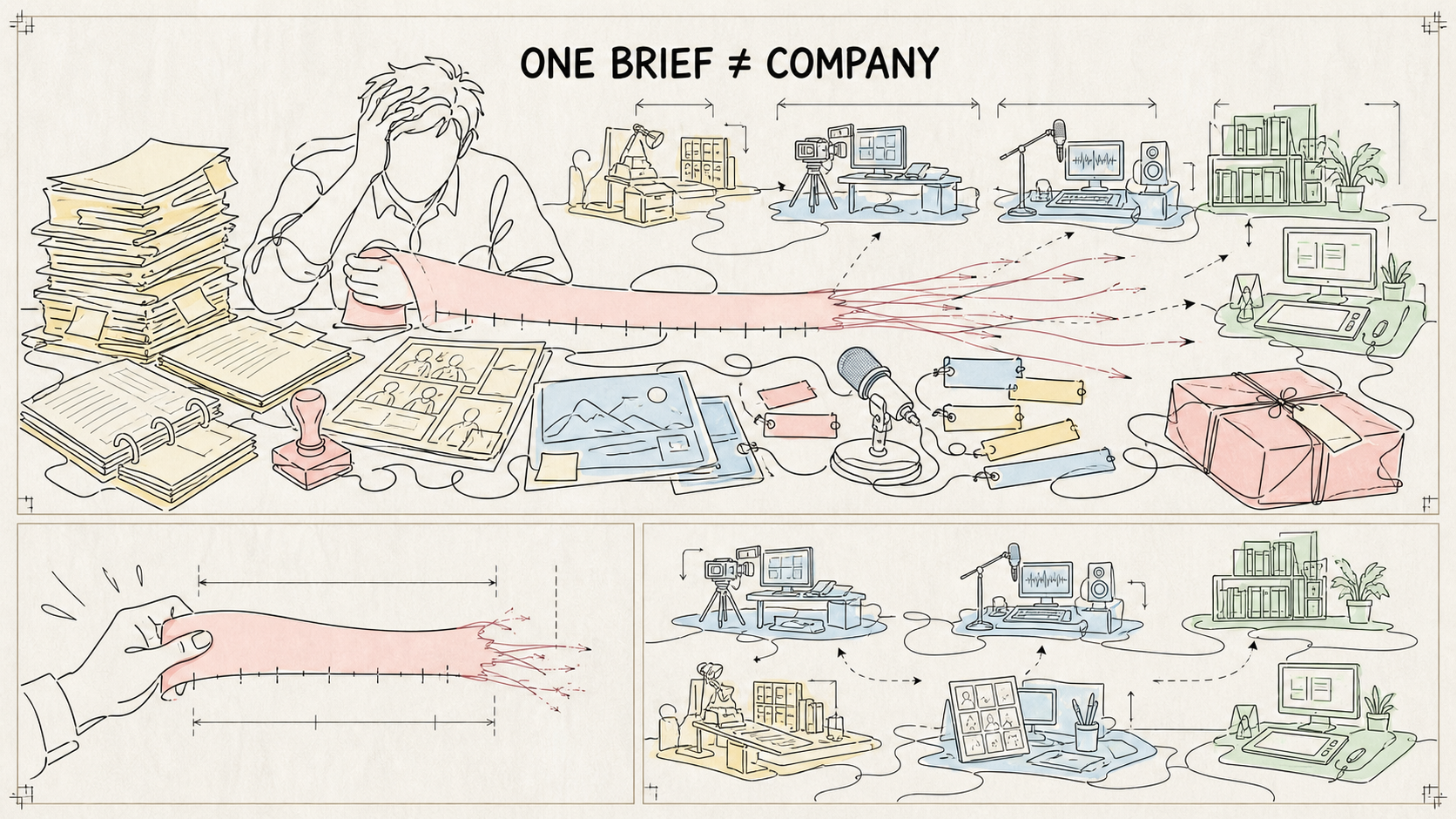
Think of context as desk space. A bigger desk holds more papers. It is not a filing system, a policy manual, or a record of decisions. Research on long-context models has also found that relevant information can become harder to use when buried in the middle of a large input. More desk is useful; it is not the same thing as an organization that remembers.
RAG can help retrieve stored facts, and a memory layer can retain preferences or events. Governance asks a different question. Knowing which database a project uses is information. Requiring every schema change to include a tested migration, rollback plan, and review gate is a rule about how the organization operates.
The fourth rung: Constitution
A constitution-based project gives the workshop a charter. It defines the mission, red lines, roles, workflows, decision records, quality gates, and session lifecycle. A lightweight router points agents to authoritative documents. A handoff records what changed during the last shift and what the next shift should do. A final review turns repeated improvisation into durable rules, tests, playbooks, or commands.
The word constitution here describes external, inspectable project governance. It is not a claim that an AI system has consciousness or moral personhood, and it is not the same as Constitutional AI, the model-training approach associated with Anthropic. The constitution governs the work around model calls; it does not magically change what the model is.
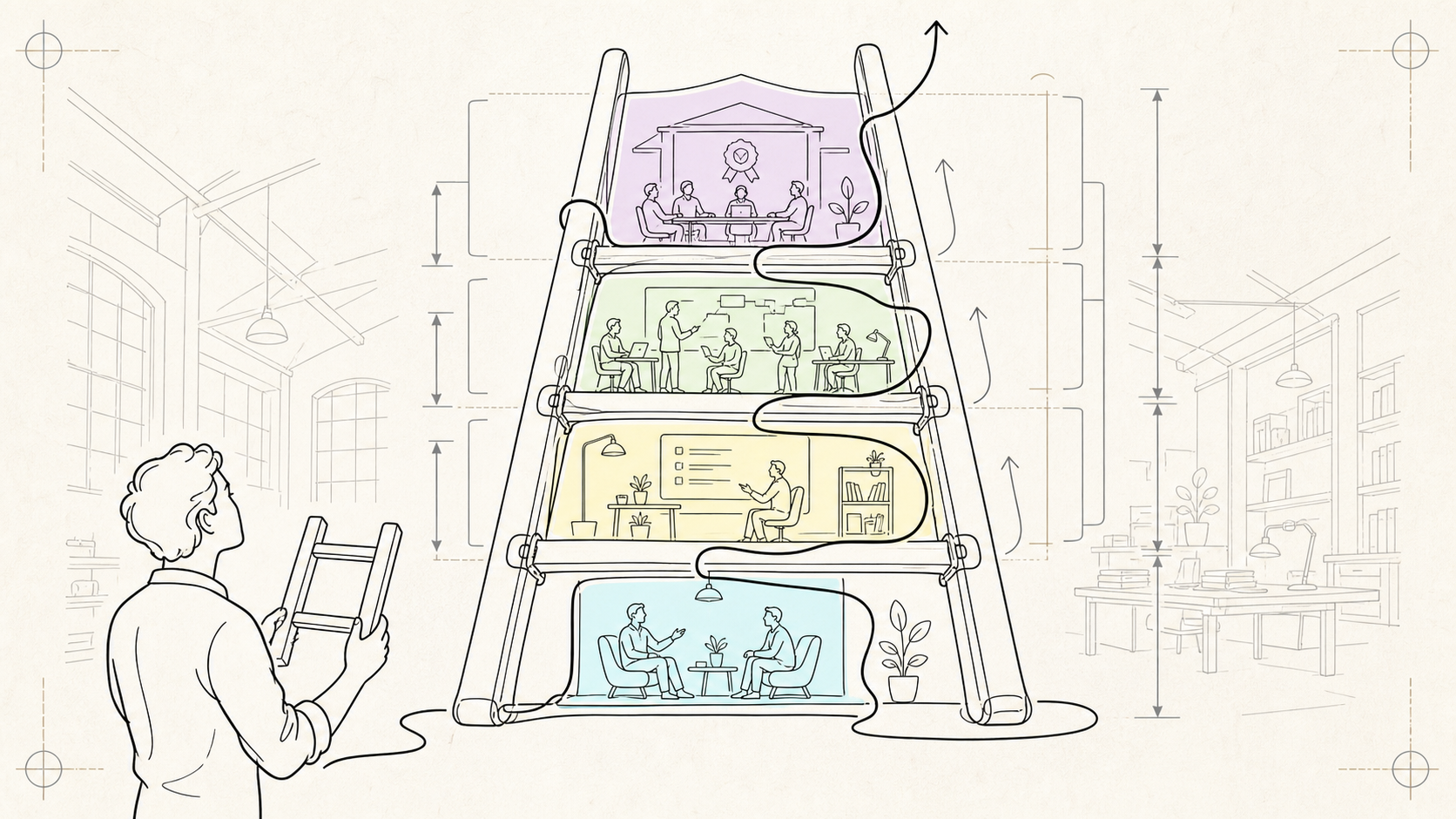
A handoff is how a stateless model can participate in a stateful project.
The human role rises with the abstraction
At the Chat rung, the human is a curious user. At Prompt, the human becomes an instruction designer. At Workflow, the human becomes an architect of roles, handoffs, tools, and gates. At Constitution, the human becomes a meta-designer: deciding what system should govern the work across time.
Calling a main agent the CEO is an operating model, not a transfer of ownership or accountability. The agent's scarce context should be spent on coordination and judgment rather than repetitive mechanics. The human remains responsible for mission, permissions, real-world consequences, and the value judgments that cannot be delegated safely.
Diagnose the rung before rewriting the prompt
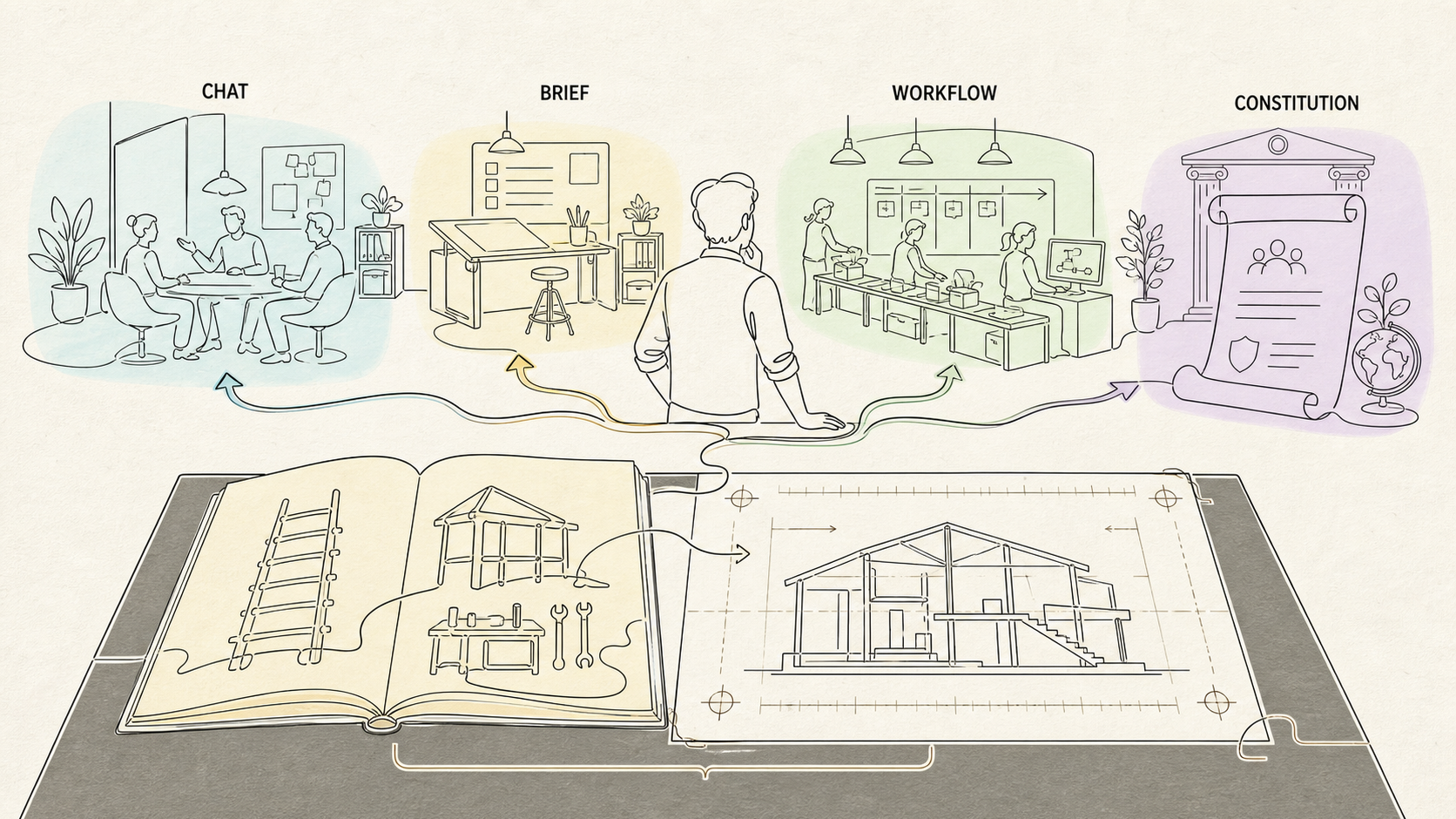
- Chat problem: You have not yet discovered what kind of help the model can provide.
- Prompt problem: The task is clear, but the instruction leaves too much room for guessing.
- Workflow problem: The result depends on several roles, tools, handoffs, or recovery steps that one prompt should not carry.
- Constitution problem: The workflow exists, but decisions, boundaries, memory, and learning disappear between sessions.
Each rung contains the one below it. A constitution still needs workflows. Workflows still need good prompts. Prompts still happen through conversation. The mistake is not using an earlier rung; it is treating that rung as the whole ladder.
Go deeper
For the full four-era history, the production case study, and the open-source architecture behind it, read or purchase Harnessing Intelligence. The practical question to carry into your own work is simple: which rung is your current problem actually on?
Further reading: OpenAI's original ChatGPT introduction; Anthropic's introduction to MCP; Lost in the Middle; Anthropic's Constitutional AI paper; and the open-source Workflow Design Bible.
Watch more first-principles field guides on Wiki4What, or read the essays at blog.wiki4what.com.