
Super Niche: Why Your Niche Is Still Too Big in the AI Era
Most founders already know they should start with a niche market. But in the AI era, even a normal niche may still be too large. A market that cannot support a ten-person startup team may be ignored b...

Chinese version: 中文版
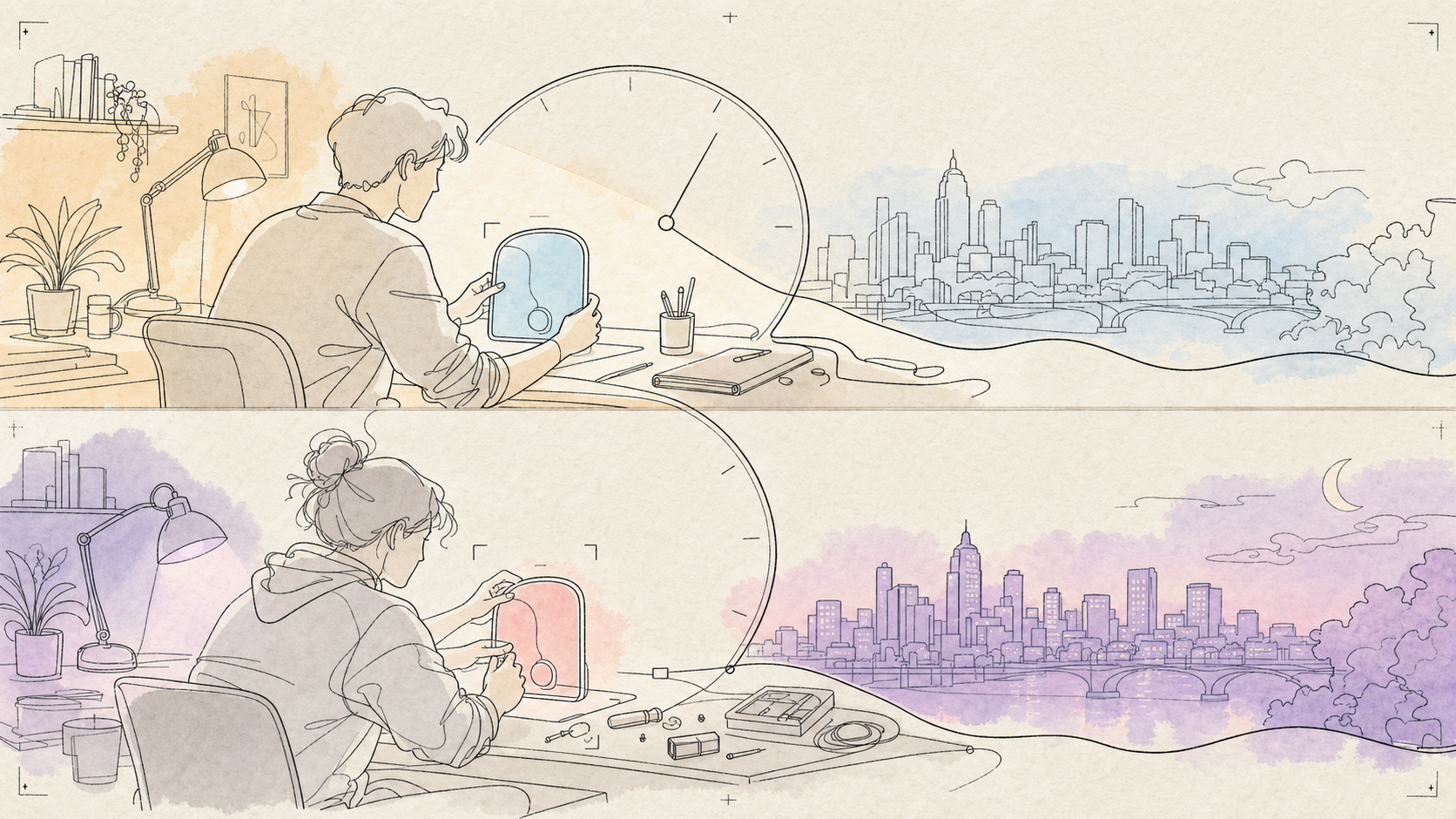
Because if AI can help you prototype a product in an afternoon, it can probably help someone else prototype a similar product by dinner.
That sounds like good news for creators. And it is. A person who could not code can now prototype a small app. Someone who is not a designer can draft a workbook, a set of templates, or a printable. AI has lowered the production barrier.
As more people can prototype, creators should expect more generic supply. The scarce thing is no longer the ability to make another planner, prompt pack, spreadsheet, or bundle. The scarce thing is knowing exactly who should look at it and think, this was made for me.
Hi, I am Leo. Welcome to Wiki4What.
This is where we unpack the mind, machines, and hidden systems shaping the AI era, through stories and models you can actually use.
The usual picture of a niche is a smaller circle. Start with fitness, narrow it to meal planning, then narrow it again until the audience looks dangerously tiny. From that picture, every step toward specificity feels like losing customers.
I think that picture is wrong.
A super niche is not a smaller circle. It is a clearer radio frequency.
Imagine standing in a city with a transmitter. You could broadcast a loud, fuzzy message on every frequency at once: “Here is a planner for busy people.” Almost everyone can hear a little of it. Nobody knows whether it is meant for them.
Or you could tune one clean signal: “This is a meal-planning system for night-shift nurses whose schedule changes every week.” Most radios will pass straight over it. But the right receiver stops. The listener recognizes not just the category, but the situation.
That recognition is the beginning of a super niche.
The product is the transmitter. The specific problem is the frequency. Search, recommendations, communities, and word of mouth are the antenna network. The audience is not everyone within range. It is the scattered group already listening for that signal.
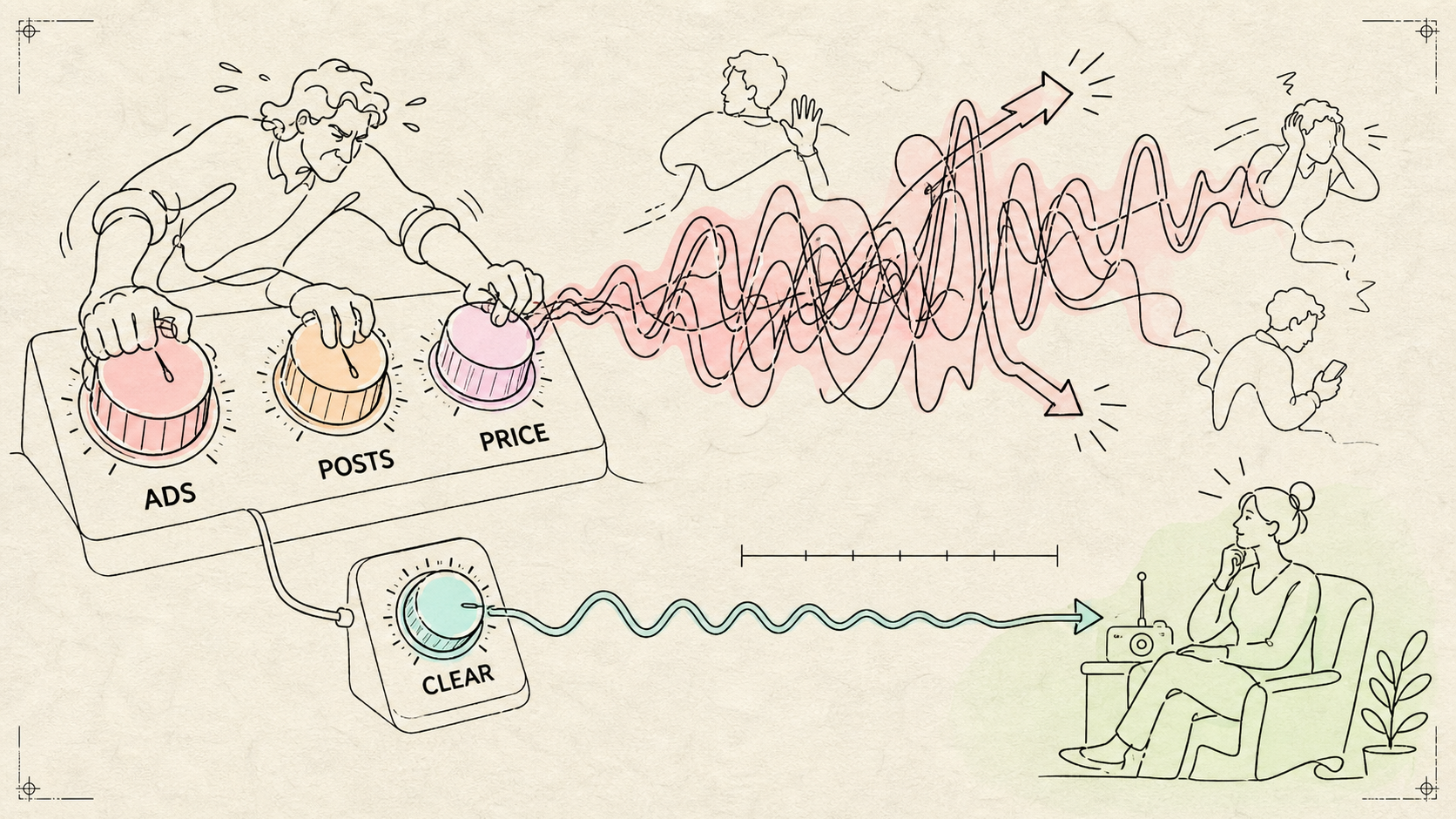
This distinction matters because loudness and clarity solve different problems. Advertising can increase loudness. More posts can increase loudness. A lower price can increase loudness. None of them can rescue a signal that says nothing specific.
AI makes this even more important. Current tools can help create documents, code, prototypes, and interactive mini-apps. That expands what one person can attempt. But “the file exists” is not the same sentence as “the product works,” and neither sentence means “a customer wants it.”
A digital product still has to survive outside the chat window. Does the buyer understand what it is? Does it solve a repeated problem? Can they use it without asking ten questions? Are the fonts, images, and other ingredients licensed for commercial use? Where will the right people discover it? What happens when a customer finds a bug, prints it on the wrong paper, or needs help opening the file?
Creation is one layer. Demand, distribution, trust, licensing, support, and iteration are other layers. AI can support parts of each layer. It does not make any of them disappear.
Consider the familiar list of digital products: budgeting spreadsheets, habit trackers, printable wall art, and graphic asset bundles. Those are formats, not ideas.
“Budget spreadsheet” is a format. “Cash-flow dashboard for freelance wedding photographers who receive deposits months before final delivery” begins to describe a customer and a real workflow.
“Social-media templates” is a format. “Workshop-announcement carousels for independent pottery teachers” begins to encode a visual language, a calendar, and a type of offer.
“Graphic bundle” is a format. “Dark-academia astronomy icons for tabletop campaign journals” begins to express a taste that some people will love and most people will ignore.
That last part is not a defect. A good frequency excludes. If nobody can tell who a product is not for, the signal is probably still too broad.
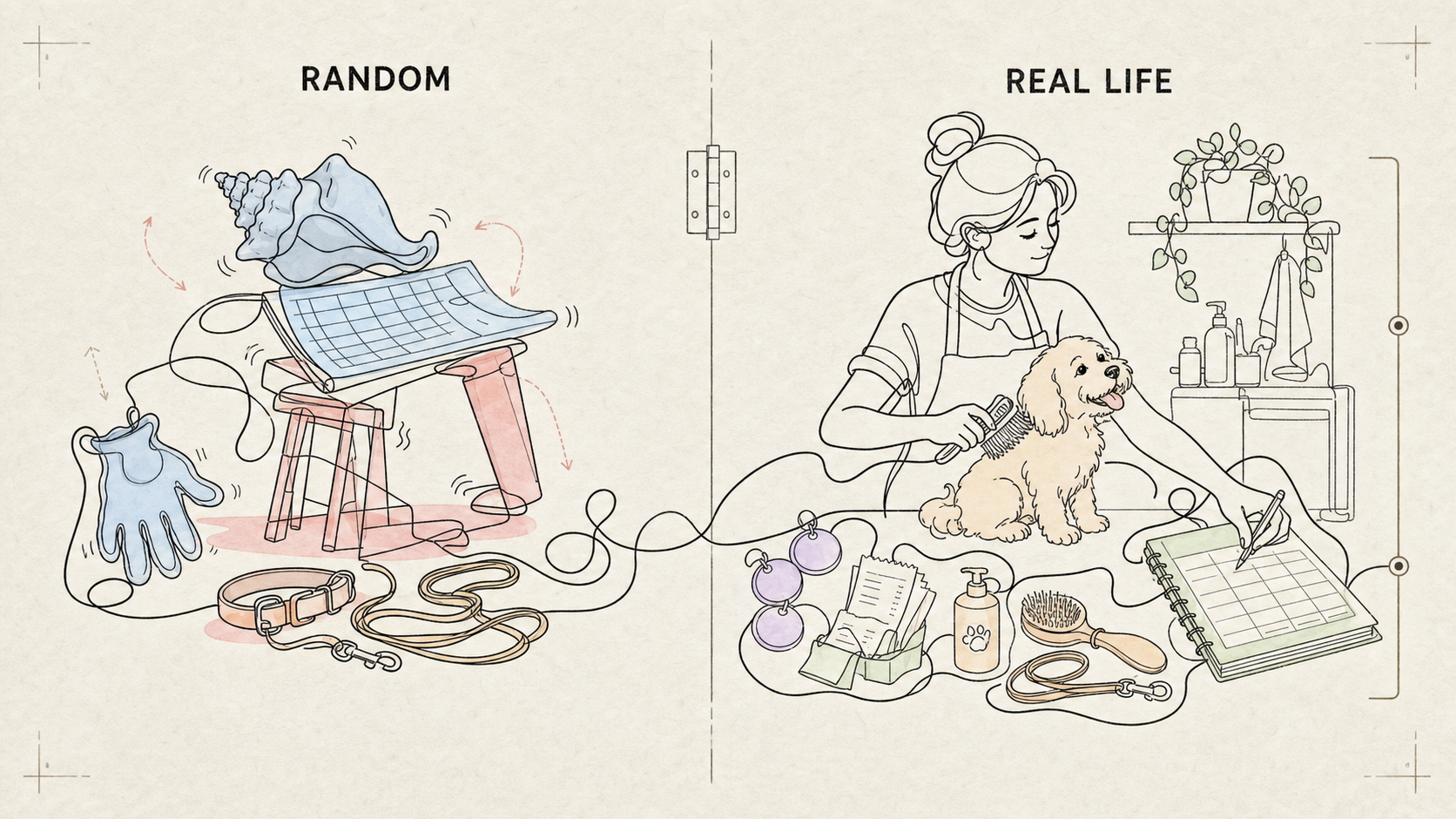
This does not mean you should glue random adjectives onto a product until it sounds unique. “Minimalist coastal budgeting template for left-handed dog owners” is specific, but the details do not form a shared problem. A super niche is not a word game. Its parts must belong together in the life of a real person.
The best place to find that connection is often your own irritation.
Think of something you already use and keep correcting. The spreadsheet whose categories never match your work. The lesson planner that assumes every class is the same length. The color palette that is technically attractive but always feels too clean. The template that makes every small business sound like the same cheerful corporation.
That recurring “almost, but not quite” is valuable. It is evidence that you have been tuning your taste inside a domain.
So before asking AI for fifty product ideas, keep a complaint log for one week. Write down the small failures you cannot stop noticing. Then look for a cluster. Not every complaint is a business. But repeated dissatisfaction can reveal a group of people who face the same awkward moment.
Next, write one receiver sentence: “This is for this kind of person, in this situation, who needs this outcome.” If the sentence could describe half the internet, keep tuning. If it describes only you, find a few other people who share the problem before building a catalog.
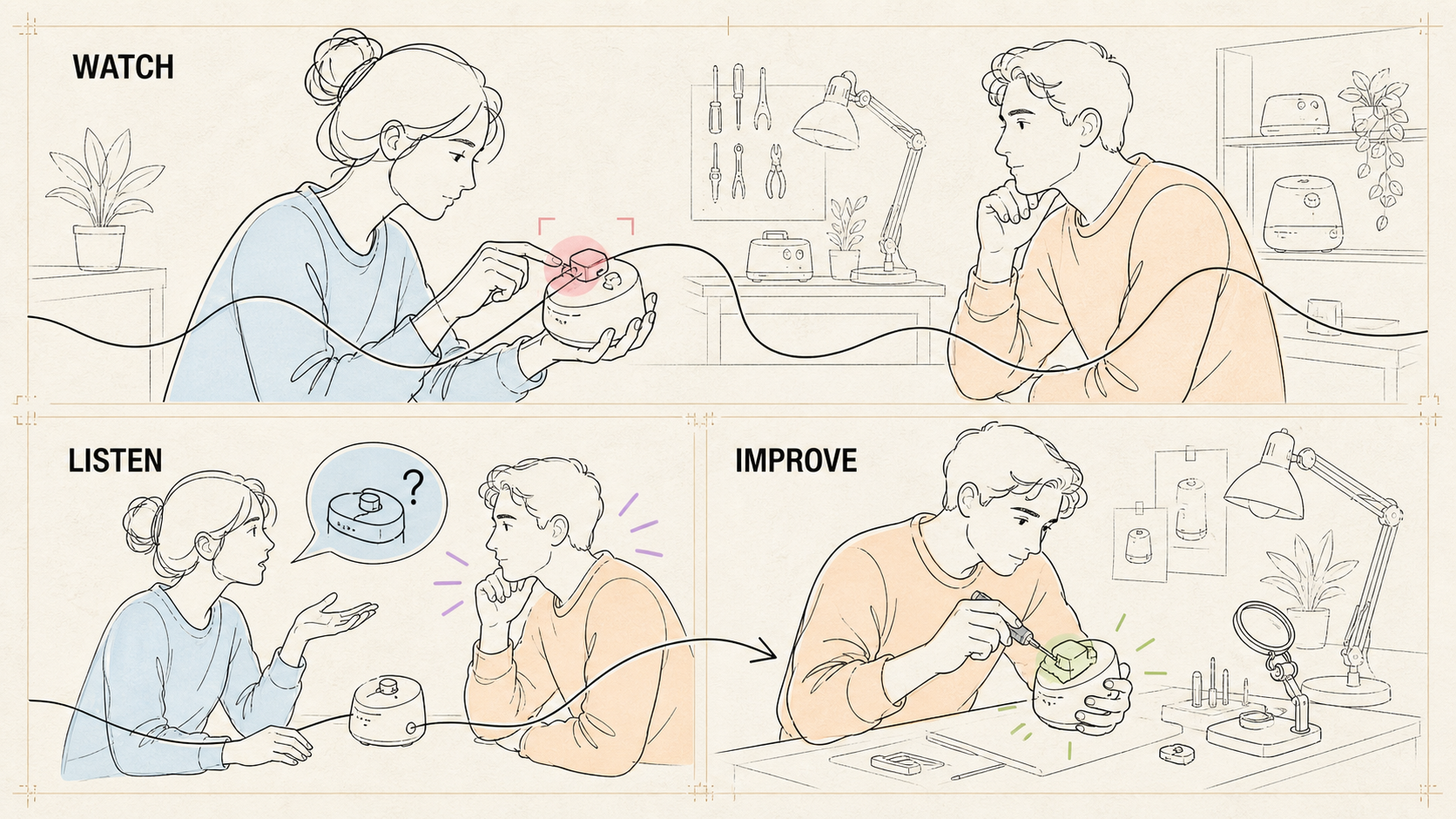
Then make the smallest version that can be used, not merely admired. One spreadsheet, not a vault of fifty. One working template set, not a giant bundle. One tiny tool that completes one job. Put it in front of actual members of the group. Watch where they hesitate. Listen to the questions they ask. Customer support is not an annoying task added after the product. At this scale, it is one of your best research channels.
Finally, go where the receivers already are. A marketplace may offer discovery, but it also brings competition, fees, rules, and a customer relationship partly controlled by the platform. A direct website gives you more control, but you must create your own path to it. A specialized forum or community can contain exactly the right people, but trust has to be earned before promotion is welcome.
There is no universal best channel. There is only the channel your particular audience already uses when they search, compare, complain, and recommend.
In a study of one multichannel retailer, consumers’ use of internet search and recommendation tools was associated with a higher share of niche-product sales. The authors concluded that lower online search costs may partly explain the result. That is encouraging, but notice what it does not say. It does not say every niche product succeeds. Better discovery helps a clear signal travel. It cannot manufacture resonance.
The same caution applies to audience arithmetic. Kevin Kelly’s “one thousand true fans” is useful because it replaces the fantasy of millions with the possibility of a direct, committed audience. Kelly also says the number is not absolute. The right count changes with price, costs, frequency of purchase, team size, and the kind of relationship you maintain.
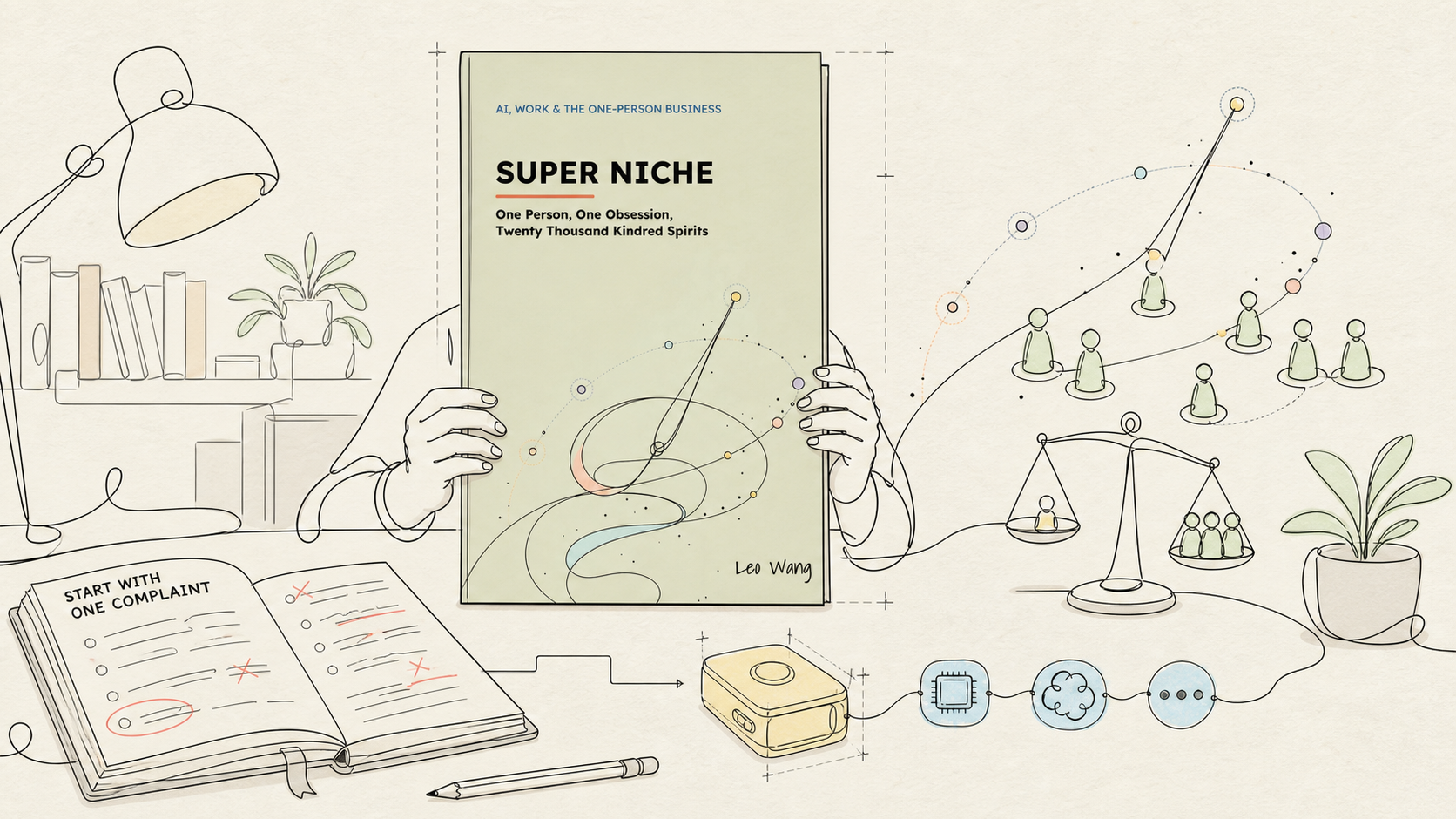
In my book, I use twenty thousand kindred spirits as a similar scale lens. It is not a promise that a database contains twenty thousand guaranteed buyers for every strange idea. It is a way to stop treating “not mass market” as the same thing as “not viable.” You may need fewer people, more people, or a different model entirely. The real question is whether enough reachable people share a problem strongly enough to support the work required to solve it.
And here is where the radio metaphor reaches its boundary. People are not passive receivers. They change their minds. They compare alternatives. They lose interest. They talk back. A market is a relationship, not a frequency you discover once and own forever.
That is why super niche does not mean passive income. It means a smaller loop between making, serving, listening, and improving. The product becomes more specific because the creator stays close enough to hear the static.
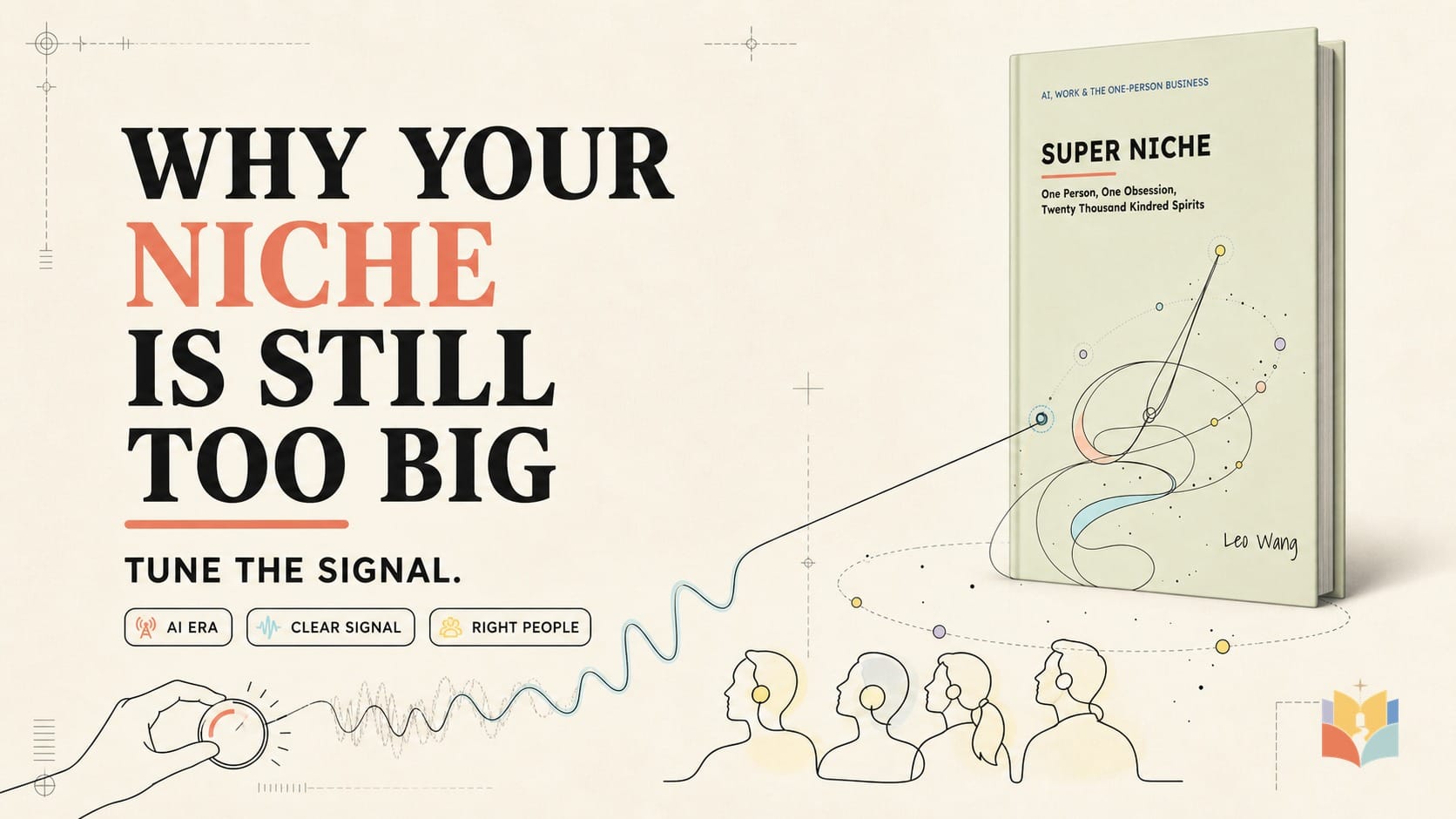
This idea became a book called Super Niche: One Person, One Obsession, Twenty Thousand Kindred Spirits. It goes much deeper into finding the obsession, using AI without becoming generic, reaching the right people, and building around enough rather than endless scale. If that is the problem you are trying to solve, you can find the book at the link above. You do not need the book to begin the experiment, though. Your complaint log is enough for tonight.
So what is the product, tool, or piece of advice in your life that is almost right, but keeps forcing you to make the same tiny correction?
Pick one idea from this episode and keep exploring it. The next useful tool, book, or decision will make more sense now.
I am Leo. See you in the next one.
Watch more first-principles field guides on Wiki4What, or read the essays at blog.wiki4what.com.